Faculté des Sciences Angers

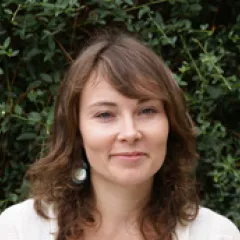
Amélie Châtel

Titles, roles and responsibilities

Titres, fonctions et responsabilités
  • Professeur section CNU 64,65, 67
  • Responsable de diplôme Master Ecologie et développement durable
  • Responsable Diplôme Universitaire Transition Ecologique et Innovation
  • Directrice adjointe du laboratoire BIOSSE

Doctorats/HDR

  • Doctorat en Ecotoxicologie Université Bretagne Occidentale - 2009
  • HDR Pertinence des outils biochimiques et moléculaires pour l’évaluation de l’état de santé d’invertébrés aquatiques exposés à des contaminants émergents - Le Mans Université - 2021

Research themes

Thématiques de recherche

Nos travaux portent sur l’écotoxicologie de contaminants émergents (nanomatériaux, micro et nanoplastiques) en milieux côtiers et estuariens.

Ces recherches visent à accroître les connaissances et à développer des outils d’évaluation en vue d'améliorer la gestion du risque lié à l'exposition des organismes à ces contaminants. La démarche intégrative sur les effets du stress chimique à différents niveaux d’organisation biologique (approche « Adverse Outcome Pathway » : AOP), depuis la molécule jusqu’à la population, développée au laboratoire ces dernières années, vis-à-vis des métaux notamment, est adaptée à ces nouveaux contaminants.

Publications

Article dans une revue
Messika Revel, Amélie Châtel, Hanane Perrein-Ettajani, Mélanie Bruneau, Farida Akcha, Rossana Sussarellu, Julien Rouxel, Katherine Costil, Priscilla Decottignies, Bruno Cognie, Fabienne Lagarde, Catherine Mouneyrac Realistic environmental exposure to microplastics does not induce biological effects in the Pacific oyster Crassostrea gigas Marine Pollution Bulletin 2020 150 pp. 110627
Article dans une revue
Amélie Châtel, Melanie Auffan, Hanane Perrein-Ettajani, Lenka Brousset, Isabelle Métais, Perrine Chaurand, Mohammed Mouloud, Simon Clavaguera, Yohann Gandolfo, Mélanie Bruneau, Armand Masion, Alain Thiéry, Jérôme Rose, Catherine Mouneyrac The necessity of investigating a freshwater-marine continuum using a mesocosm approach in nanosafety: The case study of TiO2 MNM-based photocatalytic cement NanoImpact 2020 20 pp. 1-8
Article dans une revue
Messika Revel, Nadiia Yakovenko, Timothy Caley, Catherine Guillet, Amélie Châtel, Catherine Mouneyrac Accumulation and immunotoxicity of microplastics in the estuarine worm Hediste diversicolor in environmentally relevant conditions of exposure Environmental Science and Pollution Research 2020 27 4 pp. 3574--3583
Article dans une revue
Messika Revel, Nadia Yakovenko, Thimothy Caley, Catherine Guillet, Amélie Châtel, Catherine Mouneyrac Accumulation and immunotoxicity of microplastics in the estuarine worm Hediste diversicolor Environmental Science and Pollution Research 2019
Article dans une revue
Andrew Barrick, Nicolas Manier, Pierre Lonchambon, Emmanuel Flahaut, Nisrine Jrad, Catherine Mouneyrac, Amélie Châtel Investigating a transcriptomic approach on marine mussel hemocytes exposed to carbon nanofibers: An in vitro/in vivo comparison Aquatic Toxicology 2019 207 pp. 19-28
Communication dans un congrès
Andrea Rivero Arze, Nicolas Manier, Reshma Ramdhany, Catherine Mouneyrac, Amélie Châtel Determining the nanoparticle-algae interaction in the bioaccumulation process 29. SETAC Europe annual meeting SETAC 2019
Article dans une revue
Andrew Barrick, Amélie Châtel, Nicolas Manier, Judit Kalman, José Maria Navas, Catherine Mouneyrac Investigating the Impact of Manufacturing Processes on the Ecotoxicity of Carbon Nanofibers : A Multi–Aquatic Species Comparison Environmental Toxicology and Chemistry 2019 38 10 pp. 2314-2325
Chapitre d'ouvrage
Messika Revel, Amélie Châtel, Catherine Mouneyrac Microplastic in Aquatic Environments Ecotoxicology: New Challenges And New Approaches ISTE Press - Elsevier 2019 pp. 149-179
Communication dans un congrès
Johnny Gasperi, Soline Alligant, Bruno Tassin, Messika Revel, Catherine Mouneyrac, Mouloud Mohamed, Amélie Châtel, Hanane Perrein-Ettajani, Marie-Pierre Halm-Lemeille, Aline Gangnery, Francois Galgani, Marie Laure Begout, Xavier Cousin, Catherine Dreanno, Maria El Rakwe, Jéremy Thery, Capucine Bialais, Sami Souissi, Maria Kazour, Rachid Amara, Romain Coulaud, Tiphaine Monsinjon, Benoit Xuereb, Christelle Clérandeau, Florane Le Bihanic, Caroline Vignet, Pauline Pannetier, Bénédicte Morin, Jérôme Cachot PLASTIC-Seine research project: Microplastic Flux and Impact on biota in the Seine estuary. SETAC Europe 29th annual meeting - One Environment. One Health. Sustainable Societies 2019
Article dans une revue
Laurent Devoille, Messika Revel, Célia Batana, Nicolas Feltin, Laure Giambérini, Amélie Châtel, Catherine Mouneyrac Combined influence of oxygenation and salinity on aggregation kinetics of the silver reference nanomaterial NM-300K Environmental Toxicology and Chemistry 2018
Communication dans un congrès
Messika Revel, Fabienne Lagarde, Hanane Perrein-Ettajani, Mélanie Bruneau, Farida Akcha, Rossana Sussarellu, Priscilla Decottignies, Bruno Cognie, Amélie Châtel, Catherine Mouneyrac Differential response in organs of the blue mussel Mytilus edulis exposed to microplastics at environmentally relevant concentrations SETAC Europe 28th Annual Meeting 2018
Communication dans un congrès
Messika Revel, Amélie Châtel, Fabienne Lagarde, Hanane Perrein-Ettajani, Mélanie Bruneau, Farida Akcha, Rossana Sussarellu, Julien Rouxel, K Costil, Priscilla Decottignies, Bruno Cognie, Catherine Mouneyrac Differential responses between two marine bivalves to environmentally relevant concentrations of Microplastics MICRO 2018 Fate and Impact of Microplastics: Knowledge, Actions and Solutions. 2018
Communication dans un congrès
Messika Revel, Fabienne Lagarde, Hanane Perrein-Ettajani, Mélanie Bruneau, Farida Akcha, Rossana Sussarellu, Priscilla Decottignies, Bruno Cognie, Amélie Châtel, Catherine Mouneyrac Evaluation de la bioaccumulation et de la toxicité de microplastiques chez la moule bleue Mytilus edulis exposée en laboratoire à des concentrations environnementales. Polymères et Océans Montpellier 2018
Communication dans un congrès
Judith Kalman, Nicolas Manier, Andrew Barrick, Pascal Pandard, Amélie Châtel, Catherine Mouneyrac, José M. Navas Grouping of nanomaterials as a previous step for safe by design, registration, and risk assessment: an approach based on ecotoxicity data in H2020 project NanoReg2 Iberoamerican Congress of Environmental Pollution and Toxicology 2018
Communication dans un congrès
Isabelle Rodriguez, P Gómez, L Barruetabeña, R Puelles, C Micheletti, B Suárez-Merino, A Sánchez, NR Jacobsen, N Hadrup, KD Jensen, Nicolas Manier, B Trouiller, M Apostolova, JM Navas, R Grall, Catherine Mouneyrac, Andrew Barrick, Amélie Châtel, K Sowers, GA Blaab Integrated Safety Assessment in Safe-by-design. An industrial case study. BIT's 8th Annual Congress of NanoScience and Technology 2018
Communication dans un congrès
Messika Revel, Nadia Yakovenko, T Caley, Amélie Châtel, Catherine Mouneyrac Interaction and potential effects of microplastics in the estuarine worm Hediste diversicolor at environmentally relevant conditions ECOBIM Congress 2018
Article dans une revue
Messika Revel, Amélie Châtel, Catherine Mouneyrac Micro(nano)plastics: a threat to human health? Current Opinion in Environmental Science & Health 2018
Communication dans un congrès
Andrew Barrick, Nicolas Manier, Pascal Pandard, Amélie Châtel, Catherine Mouneyrac The Application of Ecotoxicological Tools to Safer-by-Design Strategies for Engineered Nanomaterials. SETAC Europe 28th Annual Meeting 2018
Article dans une revue
Andrew Barrick, Catherine Mouneyrac, Nicolas Manier, L de Lantavy, Nisrine Jrad, Amélie Châtel Towards the development of a high throughput screening approach for Mytilus edulis hemocytes: A case study on silicon-based nanomaterials. Marine Environmental Research 2018 142 pp. 306-318
Article dans une revue
Amélie Châtel, Clémence Lièvre, Andrew Barrick, Mélanie Bruneau, Catherine Mouneyrac Transcriptomic approach: a promising tool for rapid screening Nanomaterial-mediated toxicity in the marine bivalve Mytilus edulis –Application to copper oxide nanoparticles Comparative Biochemistry Physiology Part C Toxicology Pharmacology 2018 205 pp. 26–33
Article dans une revue
Andrew Barrick, Jean-Marie Marion, Hanane Perrein-Ettajani, Amélie Châtel, Catherine Mouneyrac Baseline levels of biochemical biomarkers in the endobenthic ragworm Hediste diversicolor as useful tools in biological monitoring of estuaries under anthropogenic pressure Marine Pollution Bulletin 2018 129 1 pp. 81-85
Article dans une revue
Andrew Barrick, Catherine Guillet, Amélie Châtel, Catherine Mouneyrac, Amélie Châtel Investigating the establishment of primary cultures of hemocytes from Mytilus edulis Cytotechnology 2018 70 4 pp. 1205-1220
Article dans une revue
Andrew Barrick, Catherine Mouneyrac, Nicolas Manier, Loïc de Lantivy, Nisrine Jrad, Amélie Châtel Towards the development of a high throughput screening approach for Mytilus edulis hemocytes: A case study on silicon-based nanomaterials Marine Environmental Research 2018 142 pp. 306-318
Communication dans un congrès
Andrew Barrick, Mélanie Bruneau, Catherine Mouneyrac, Amélie Châtel Nanomaterial Toxicity through a High Throughput Screening Approach on Mytilus edulis Hemocytes COST Enter final Meeting, 7 février Aveiro Portugal 2017
Article dans une revue
Messika Revel, Amélie Châtel, Catherine Mouneyrac Omics tools: New challenges in aquatic nanotoxicology? Aquatic Toxicology 2017 193 pp. 72 - 85
Article dans une revue
Amélie Châtel, Catherine Mouneyrac Signaling pathways involved in metal-based nanomaterial toxicity towards aquatic organisms Comparative Biochemistry and Physiology Part C: Toxicology & Pharmacology 2017 196 pp. 61 - 70
Article dans une revue
Amélie Châtel, C Lièvre, A Goupil, Mélanie Bruneau, Catherine Mouneyrac Spermatozoa: a relevant biological target for genotoxic assessment of contaminants in the estuarine bivalve Scrobicularia plana Marine Pollution Bulletin 2017 116 1-2 pp. 488–490
Article dans une revue
Simon Devin, Pierre-Emmanuel Buffet, Amélie Châtel, Hanane Perrein-Ettajani, E Valsami-Jones, Catherine Mouneyrac The Integrated Biomarker Response: a suitable tool to evaluate toxicity of metal-based nanoparticles Nanotoxicology 2017 11 pp. 1–6
Article dans une revue
Andrew Barrick, Amélie Châtel, Mélanie Bruneau, Catherine Mouneyrac The role of high-throughput screening in ecotoxicology and engineered nanomaterials Environmental Toxicology and Chemistry 2017 36 7 pp. 1704–1714
Article dans une revue
Catherine Mouneyrac, Fabienne Lagarde, Amélie Châtel, FR Khan, K Syberg, A Palmqvist The Role of Laboratory Experiments in the Validation of Field Data Comprehensive Analytical Chemistry 2017 75 pp. 241–273
Article dans une revue
Andrew Barrick, Amélie Châtel, Jean-Marie Marion, Hanane Perrein-Ettajani, Mélanie Bruneau, Catherine Mouneyrac A novel methodology for the determination of biomarker baseline levels in the marine polychaete Hediste diversicolor Marine Pollution Bulletin 2016 108 pp. 275–280
Communication dans un congrès
Nam Ngoc Phuong, Aurore Zalouk-Vergnoux, Laurence Poirier, A Kamari, Rossana Sussarellu, Julien Rouxel, Farida Akcha, Amélie Châtel, Catherine Mouneyrac, Fabienne Lagarde Comparison of mussel tissues preparation procedures to perform microplastic analysis; application to mussels (Mytilus edulis) from the coast of Pays de la Loire (France) SETAC Europe 26th Annual Meeting 2016
Communication dans un congrès
Carole Bertrand, Simon Devin, Catherine Mouneyrac, Mélanie Auffan, Amélie Châtel, Vanessa Koehlé-Divo, C Pagnout, Sandrine Pain-Devin, A Pariat, Hanane Perrein-Ettajani, Laurence Poirier, Aurore Zalouk-Vergnoux, Laure Giambérini Cross effects of salinity and ceria nanoparticles on two endobenthic bivalves Corbicula fluminea and Scrobicularia plana: multibiomarker assessment SETAC Europe 26th Annual Meeting 2016
Communication dans un congrès
Nam Ngoc Phuong, Aurore Zalouk-Vergnoux, Laurence Poirier, A Kamari, Julien Rouxel, Rossana Sussarellu, Farida Akcha, Amélie Châtel, Catherine Mouneyrac, Fabienne Lagarde Development of analytical procedure for microplastic analysis in biological tissues: application to mussels (Mytilus edulis) from the Atlantic coast (Pays de la Loire, France) 7th SETAC World Congress, SETAC North America 37th Annual Meeting 2016
Article dans une revue
Nam Ngoc Phuong, Aurore Zalouk-Vergnoux, Laurence Poirier, A Kamari, Amélie Châtel, Catherine Mouneyrac, Fabienne Lagarde Is there any consistency between microplastics 1 found in the field and those used in laboratory experiments? Environmental Pollution 2016 211 pp. 111–123
Communication dans un congrès
Andrew Barrick, Mélanie Bruneau, Catherine Mouneyrac, Amélie Châtel Nanomaterial Toxicity through a High Throughput Screening Approach on Mytilus edulis Hemocytes. 7th SETAC World Congress SETAC North America 37th Annual Meeting 2016
Communication dans un congrès
Simon Devin, Pierre-Emmanuel Buffet, Amélie Châtel, Hanane Perrein-Ettajani, Catherine Mouneyrac The Integrated Biomarker Response: a suitable tool to evaluate toxicity of metal-based nanoparticles SETAC Europe 26th Annual Meeting 2016
Article dans une revue
Carole Bertrand, Aurore Zalouk-Vergnoux, Laure Giambérini, Laurence Poirier, Simon Devin, Jérôme Labille, Hanane Perrein-Ettajani, Christophe Pagnout, Amélie Châtel, Clément Levard, Melanie Auffan, Catherine Mouneyrac The influence of salinity on the fate and behavior of silver standardized nanomaterial and toxicity effects in the estuarine bivalve Scrobicularia plana Environmental Toxicology and Chemistry 2016 35 10 pp. 2550--2561
Communication dans un congrès
Amélie Châtel, Mélanie Bruneau, Hanane Perrein-Ettajani, Catherine Mouneyrac DNA integrity in the bivalve Scrobicularia plana exposed to Benzo[a]Pyrene 25th Annual Meeting SETAC Europe 2015
Communication dans un congrès
Carole Bertrand, Aurore Zalouk-Vergnoux, Catherine Mouneyrac, Laurence Poirier, Amélie Châtel, Hanane Perrein-Ettajani, Mélanie Auffan, M Tella, C Pagnout, Simon Devin, Laure Giambérini Influence of salinity on fate and behavior of silver-based manufactured nanomaterials and toxicity effects toward two endobenthic bivalves Corbicula fluminea and Scrobicularia plana 25th Annual Meeting SETAC Europe 2015

Thesis supervision

Clémentine Labbé Ecotoxicologie des microplastiques d'origine continentale le long du continuum sol-milieu aquatique. 2022 – 2026

La production mondiale de plastiques ne cesse d’augmenter depuis les années 1950 et a atteint 390,7 millions de tonnes par an en 2021 (« Plastics - the facts 2022 », s. d.). Cette production exponentielle combinée à une gestion limitée de leur fin de vie conduit à une pollution croissante des milieux terrestres, marins et d’eau douce (Borrelle et al., 2020; Horton et al., 2017; Lebreton & Andrady, 2019). Dans l’environnement, ces déchets plastiques peuvent se fragmenter en microplastiques (MP, particules de plastiques < 5mm) sous l’action du vent, des UV, de l’eau ou des microorganismes (Andrady, 2017; Kale et al., 2015). Bien que présents dans tous les compartiments, la majorité des études se sont concentrées sur la caractérisation et l’impact des MP dans le milieu marin. Cependant, les milieux terrestres et d’eau douce sont considérés comme des milieux sources et des voies de transport pour les MP vers l’océan (Horton et al., 2017).  


Cette thèse s’intéresse à l’impact de MP d’origine continentale (issus de l’agriculture ou provenant de macrodéchets plastiques) sur deux espèces représentatives du continuum sol/milieu aquatique :

  • Scrobicularia plana, un bivalve endo-benthique vivant dans le sédiment des zones estuariennes et côtières (Santos et al., 2011)
  • Caenorhabditis elegans, un nématode vivant dans les eaux interstitielles du sol (Bhagat et al., 2021).  


École doctorale : VAAME (VEGETAL, ANIMAL, ALIMENT, MER, ENVIRONNEMENT) - Collège doctoral Pays de la Loire

Evan Bossard Microplastique dans la Loire et leurs effets des bivalves à la santé humaine : développement d'outils pour l'évaluation des risques environnementaux liés aux plastiques.

Ma thèse s'inscrit dans le projet PLASTERA, qui consiste à évaluer les risques liés à la contamination par les microplastiques (MPs) et polluants associés, au niveau de la Loire et de son estuaire. L'objectif est d'analyser l'impact de cette pollution sur la santé environnementale, animale et humaine.

Ce projet adopte une approche intégrée en s'intéressant à la pollution plastique dans un contexte global, en lien avec le concept “One Health”. Il ne se limite donc pas à la caractérisation de la pression exercée par les MPs sur les écosystèmes ou sur des organismes modèles, mais cherche à comprendre les effets à l'échelle de la santé dans sa globalité.

Courses taught

Enseignements

Physiologie cellulaire

Biotechnologies

Immunologie

Ecotoxicologie